


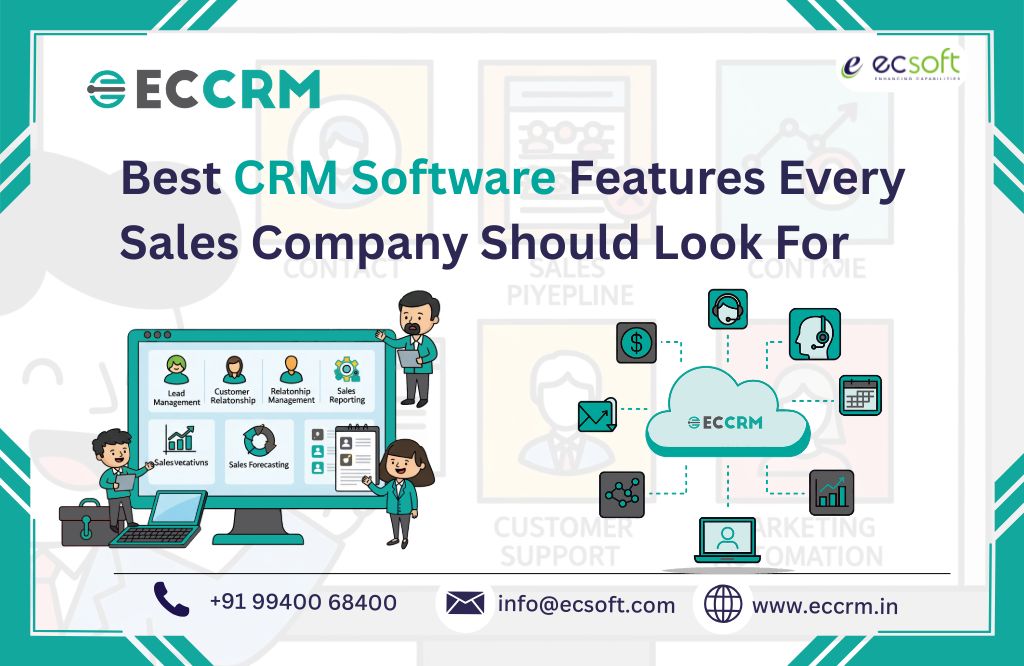
Best CRM Features Every Sales Company Should Look For
The Ultimate Guide to Choosing a CRM That Drives Sales Growth, Customer Relationships, and Business Success
In today's highly competitive business environment, managing customer relationships effectively is no longer optional—it's essential. Sales teams are expected to respond faster, nurture leads efficiently, close deals quicker, and provide personalized customer experiences. To achieve these goals, businesses need a powerful CRM Software that goes beyond simple contact management.
The right Customer Relationship Management (CRM) Software can transform the way sales organizations operate by centralizing customer data, automating repetitive tasks, improving collaboration, and providing actionable insights that help sales teams perform at their best.
However, with numerous CRM solutions available in the market, choosing the right one can be challenging. Not every CRM offers the same capabilities, and selecting a system without the necessary features can limit business growth and productivity.
This comprehensive guide explores the Best CRM Features Every Sales Company Should Look For, helping businesses make informed decisions when investing in a CRM platform that supports long-term success.
Why CRM Software is Essential for Modern Sales Companies
Sales teams handle multiple prospects, customer interactions, follow-ups, quotations, negotiations, and opportunities every day. Without a centralized system, valuable information can become scattered across emails, spreadsheets, and individual employee records.
A modern CRM Software Solution helps sales organizations:
- Manage leads effectively
- Track customer interactions
- Improve sales productivity
- Increase conversion rates
- Strengthen customer relationships
- Streamline communication
- Generate accurate sales forecasts
- Improve team collaboration
- Enhance customer retention
Businesses that leverage a feature-rich Sales CRM Software gain a significant competitive advantage by making data-driven decisions and delivering exceptional customer experiences.
Key CRM Features Every Sales Company Should Look For
1. Lead Management and Lead Tracking
One of the most important features of any CRM for Sales Teams is effective lead management.
A robust Lead Management CRM should allow businesses to:
- Capture leads from multiple sources
- Organize lead information centrally
- Assign leads automatically
- Track lead activities
- Monitor lead status
- Prioritize high-potential prospects
With effective lead tracking, sales teams can focus on opportunities that are most likely to convert into customers.
Benefits:
- Faster lead response times
- Higher conversion rates
- Improved sales efficiency
- Better lead nurturing
2. Contact and Customer Management
At the core of every successful CRM is comprehensive customer management.
A good Customer Management CRM Software should provide a centralized database containing:
- Customer contact details
- Communication history
- Purchase records
- Meeting notes
- Service interactions
- Business preferences
Having complete customer visibility enables sales representatives to deliver personalized interactions and build stronger relationships.
Benefits:
- Better customer engagement
- Improved customer retention
- Personalized communication
- Enhanced customer experience
3. Sales Pipeline Management
An effective Sales Pipeline Management System provides visibility into every stage of the sales process.
Sales managers should be able to track:
- New inquiries
- Qualified leads
- Opportunities
- Proposals
- Negotiations
- Closed deals
A visual sales pipeline helps businesses identify bottlenecks and improve overall sales performance.
Benefits:
- Better sales forecasting
- Improved deal tracking
- Increased pipeline visibility
- Higher win rates
4. Sales Automation
Sales teams often spend excessive time on repetitive administrative tasks.
A modern Sales Automation CRM automates:
- Follow-up reminders
- Lead assignments
- Task creation
- Email notifications
- Opportunity updates
- Workflow approvals
Automation allows sales representatives to spend more time selling and less time managing manual processes.
Benefits:
- Increased productivity
- Reduced human errors
- Faster response times
- Improved operational efficiency
5. Opportunity Management
Every sales opportunity represents potential revenue.
A powerful Opportunity Management CRM enables businesses to:
- Track opportunities through every sales stage
- Monitor deal value
- Estimate closing probability
- Record competitor information
- Manage customer requirements
This helps sales teams focus on high-value opportunities and improve conversion rates.
Benefits:
- Better revenue forecasting
- Improved deal visibility
- Enhanced opportunity tracking
- Faster deal closures
6. Mobile CRM Accessibility
Today's sales professionals are constantly on the move.
A modern Mobile CRM Software allows users to:
- Access customer information anywhere
- Update opportunities in real time
- Record meeting outcomes instantly
- Manage tasks remotely
- Stay connected with customers
Mobile access ensures sales teams remain productive regardless of location.
Benefits:
- Real-time updates
- Improved responsiveness
- Greater flexibility
- Increased sales productivity
7. Reporting and Analytics
Data-driven sales organizations consistently outperform competitors.
An advanced CRM Reporting and Analytics Solution should provide:
- Sales performance reports
- Lead conversion reports
- Revenue analysis
- Team productivity metrics
- Forecasting dashboards
Real-time analytics help management make informed business decisions.
Benefits:
- Improved decision-making
- Better performance monitoring
- Accurate forecasting
- Increased profitability
How the Right CRM Features Help Sales Companies Grow
Businesses that implement a feature-rich Sales CRM Software experience measurable improvements in:
- Lead conversion rates
- Customer retention
- Sales productivity
- Team collaboration
- Revenue growth
- Forecast accuracy
- Customer satisfaction
The right CRM transforms sales operations from reactive processes into proactive, data-driven strategies that accelerate business growth.
Choosing the Best CRM for Your Sales Business
When evaluating CRM solutions, avoid selecting software based solely on price.
Instead, focus on:
- Business requirements
- Scalability
- Ease of use
- Mobile accessibility
- Automation capabilities
- Reporting features
- Integration options
- Customer support
The best CRM is one that aligns with your sales process and supports your organization's future growth.
The Future of Sales Success Depends on CRM Technology
As customer expectations evolve and competition increases, sales companies need technology that enables agility, efficiency, and customer-centric operations.
Modern CRM Software has become the foundation of successful sales organizations by helping teams manage relationships, automate workflows, analyze performance, and close deals faster.
Companies that invest in the right CRM today position themselves for sustainable growth, stronger customer relationships, and long-term market success.
Conclusion
Choosing the right CRM Software for Sales Companies is one of the most important decisions a business can make. The ideal CRM should provide comprehensive capabilities including Lead Management, Sales Pipeline Management, Sales Automation, Mobile CRM Access, Reporting and Analytics, Workflow Automation, and Customer Relationship Management.
By focusing on these essential CRM features, businesses can improve operational efficiency, strengthen customer relationships, increase sales conversions, and drive consistent revenue growth.
Looking for the Best CRM Software for Your Sales Team?
A powerful CRM can help your organization manage leads, automate sales processes, improve team productivity, and accelerate business growth.
Book a Free Demo today and discover how the right CRM Software can transform your sales operations, improve customer engagement, and help your business achieve higher sales performance and long-term success.